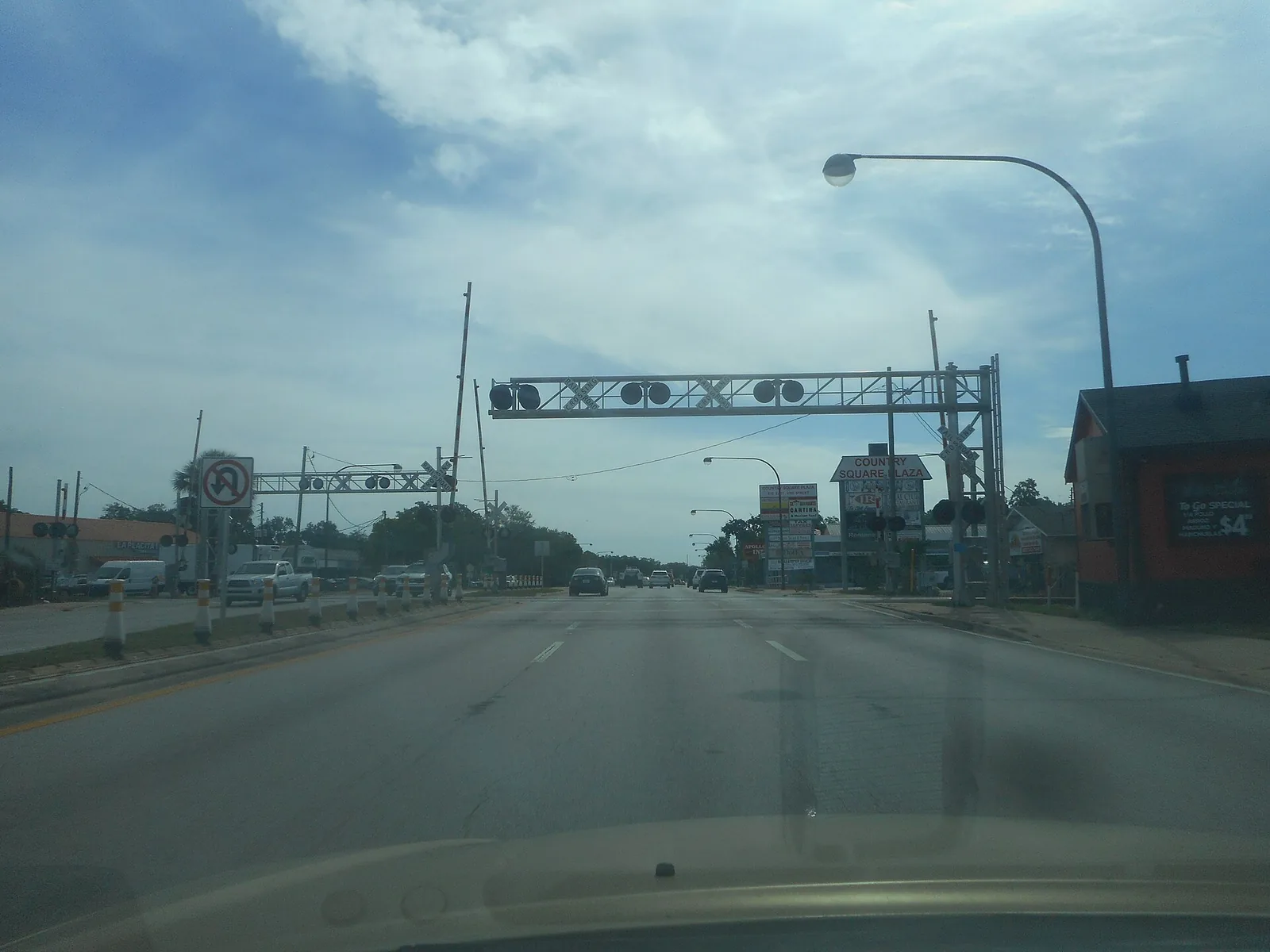
Kissimmee finished the crossing work to restore its downtown Quiet Zone, but no date is set. Until then, trains sound horns at each crossing, overnight too.
Overview
Train horns will keep sounding at downtown Kissimmee’s railroad crossings for now, including at night. The city has finished the crossing improvements needed to bring back its Quiet Zone. The work is now being inspected, and no date has been set for the horns to stop.
The city of Kissimmee said its own work is complete and the project has moved into inspection. It announced the step in a Nov. 12 update on the downtown Quiet Zone.
The city is working with the Florida Department of Transportation on the remaining steps. The Federal Railroad Administration then has to reinstate the Quiet Zone.
“With several agencies involved in the final steps, a reinstatement date has not been confirmed yet,” the city said. It said restoring the Quiet Zone remains a top priority and that it will share the date once it is set.
Why the horns came back
Kissimmee first received its Quiet Zone designation in 2021. To keep it, the city had to make safety improvements at its crossings. It announced the project in a July 31 release on the railroad safety work.
Construction was scheduled to start the week of Aug. 10 and to finish by November. The city’s public works department listed this work:
- improvements at the crossings at Vine Street (U.S. 192) and Clay Street
- updated railroad signs and pavement markings
- longer median extensions and new delineators at the East Oak Street crossing
The updated Quiet Zone will no longer include the East Donegan Avenue crossing, the city said.
While the work goes on, federal rules require train engineers to sound their horns at public crossings. The city said routine horn use will end inside the Quiet Zone once the work is approved.
What the federal rule requires
The Federal Railroad Administration sets the rules in its train horn rule and quiet zone guidance. Outside a quiet zone:
- engineers must sound the horn at least 15 seconds and no more than 20 seconds before a public crossing
- the pattern is two long blasts, one short blast and one long blast
- a horn must sound at no less than 96 decibels and no more than 110 decibels
Inside a quiet zone, horns are not routinely sounded. The agency said engineers can still use them in an emergency, for example when a person, vehicle or animal is on the tracks.
What it means for you
- If you live or work near the downtown tracks, expect horns at each public crossing, day and night, until the Quiet Zone is reinstated.
- East Donegan Avenue will stay outside the updated Quiet Zone, so trains will keep sounding horns there after the change.
- Horns may still sound inside the Quiet Zone in an emergency.
- Questions about the project go to the city’s project manager, listed on the city’s Quiet Zone update.
Kissimmee Now will update this story when the city announces the reinstatement date.
Have your say