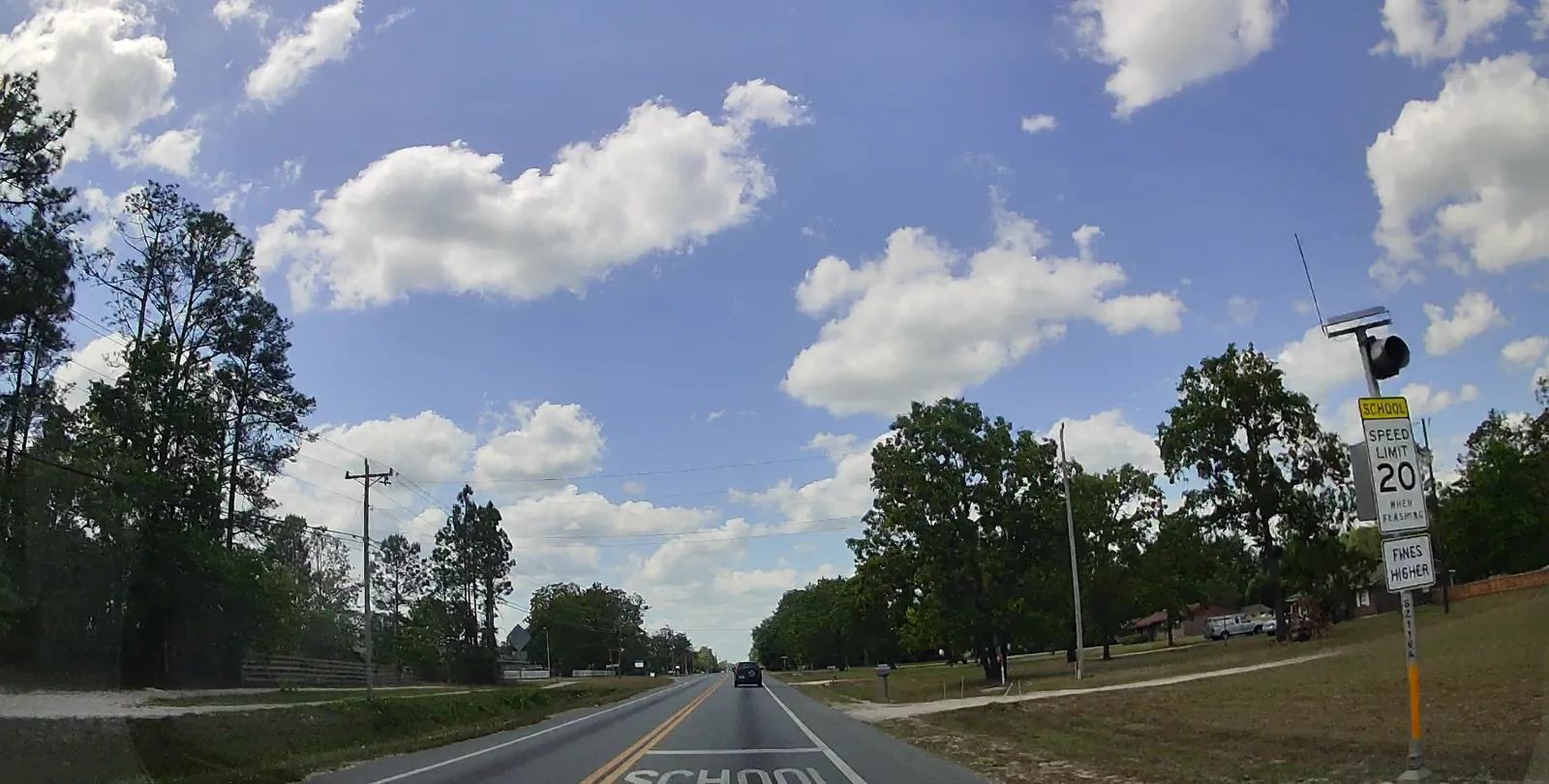
Kissimmee commissioners picked NovoaGlobal on Nov. 3 to run speed cameras in city school zones. Fines would be $100, after a 30-day warning period.
Kissimmee is moving toward speed cameras in its school zones. The City Commission voted Nov. 3 on hiring a company to run them.
Updated Nov. 5: The City Commission approved the selection of NovoaGlobal on Nov. 3 as part of the consent agenda, the city’s action summary for the meeting shows. Staff can now negotiate the contract. The city has not yet named the zones, the number of cameras or a start date.
City staff recommend NovoaGlobal, the top-ranked of five companies that bid. The item is on the consent agenda for the commission’s meeting at 6 p.m. Tuesday, Nov. 3, at City Hall, according to the meeting agenda. Consent items are approved in one vote unless a commissioner asks to discuss one separately.
What the city is proposing
The Police Department ran the selection with the city’s purchasing staff, the staff report said. An evaluation committee reviewed all five proposals and chose NovoaGlobal unanimously.
The staff report sets out how the program would work:
- NovoaGlobal would study each school zone in the city first.
- The city would then pick the zones that get cameras.
- A public education campaign and a warning period would come before any fines.
- NovoaGlobal would install and maintain the cameras “at zero cost to the City.”
- The company would be paid from a share of the fines.
- NovoaGlobal would review each recorded violation, then send it to the Police Department to process.
Drivers would first get a notice of violation, which carries no points on a license, the staff report said. If the notice is not paid, a uniform traffic citation follows. The city said the program would work the same way as its red-light camera program.
The vote lets staff negotiate a contract with NovoaGlobal and lets the mayor sign it. The report does not say which school zones, how many cameras or when enforcement would start.
How the bidding went
The city advertised the contract Aug. 2 and opened bids Aug. 31, according to the purchasing office’s Oct. 15 summary in the agenda packet. It was a re-bid. The five companies ranked by the evaluation committee were:
- NovoaGlobal
- BLUELINE Solutions
- Jenoptik Smart Mobility Solutions
- Altumint
- Acusensus
None of the bidders is based in Osceola County, the purchasing office said, so the local vendor preference did not apply.
What state law allows
Florida law lets cities use cameras to ticket drivers going more than 10 mph over the school zone limit. Under section 316.1896 of Florida Statutes, the cameras can issue tickets:
- from 30 minutes before to 30 minutes after a regular school breakfast program starts
- from 30 minutes before to 30 minutes after the school day starts
- from 30 minutes before to 30 minutes after the school day ends
- for more than 10 mph over the posted limit at any time during the school day
The fine is $100, under section 318.18. The notice must be mailed within 30 days of the violation. The owner then has 30 days to pay or ask for a hearing.
Before cameras go up, the law sets three more steps:
- An ordinance. The city must have one, adopted after a public hearing. It must consider traffic data or other evidence for each zone and find that each zone is a “heightened safety risk,” under section 316.008. The Nov. 3 agenda does not include an ordinance, and the staff report does not say whether the city has adopted one.
- Signs. Each zone must have signs saying cameras enforce the limit and showing the hours, under section 316.0776.
- Warnings first. A city starting a program must announce it and run a public awareness campaign at least 30 days before enforcement. Only warnings may be issued during that campaign, and the city must announce the start date, the same section says.
Where the $100 goes
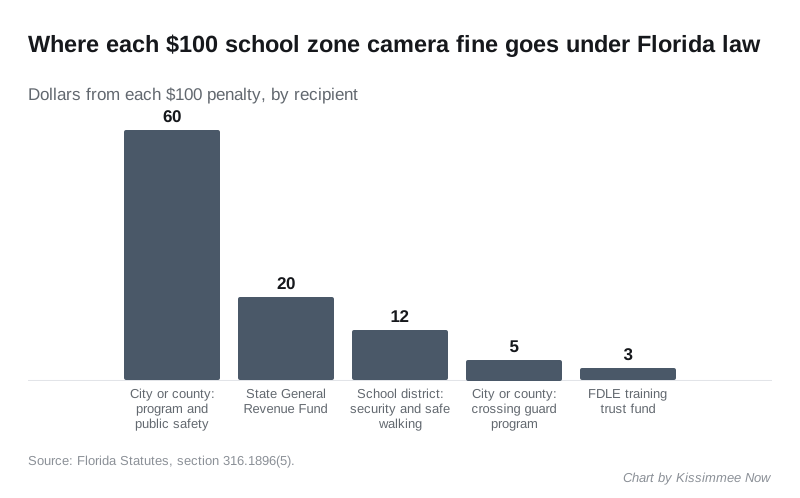
State law splits each $100 fine five ways, under section 316.1896:
- $60 to the city or county, for the camera program and other public safety work
- $20 to the state’s General Revenue Fund
- $12 to the school district, for school security, student transportation or safe walking
- $5 to the city or county’s school crossing guard program
- $3 to the Florida Department of Law Enforcement’s training trust fund
The statute does not say how the city’s share is split with the camera company. That will be set in the contract the city negotiates.
What it means for you
- Nothing changes yet. No cameras are up and no fines are being issued.
- You will get notice first. State law requires at least 30 days of public warnings before the first fine, and the city has said it will run an education campaign.
- Have your say. Any ordinance on the cameras needs a public hearing under state law, and you can speak during the Hear Audience part of any City Commission meeting.
- Slow down now. School zone limits already apply when the signs flash. School District of Osceola County schools in the city are listed on our Kissimmee schools page.
For current road work around the city, see our road construction and closures page.
Have your say